



In the world of education and workforce research, the data we work with frequently contains codes. These codes can represent many things, such as institutions, industries, programs, and other information.
Most recently, ERDC’s workforce data now features Standard Occupational Classification (SOC) codes.
What are SOC codes, and why are they important?
Produced by the U.S. Bureau of Labor Statistics, Standard Occupational Classification (SOC) codes are a federal statistical standard that classifies workers into occupational categories – 867 of them, to be exact. These detailed occupational codes roughly translate into job titles, providing a level of data granularity not formerly present in our workforce data. Alongside North American Industry Classification System (NAICS) codes (seen in ERDC’s High School Graduate Outcomes and Earnings for Graduates dashboards) and Classification of Instructional Programs (CIP) codes (seen in ERDC’s Earnings for Graduates and Statewide Public Four-Year dashboards), SOC codes help us understand progression from a postsecondary program to industry type to actual job. Not every student takes a job that corresponds to their field of study, and not every worker holds a job that aligns with their employer’s industry. Let’s consider a computer science graduate (CIP code = 11.0101, for example) who goes on to work for a food services company, perhaps one with the “snack and nonalcoholic beverage bar” (NAICS code = 722515) industry designation. Without SOC codes, it can be hard to know whether that graduate is using their degree in their current work.
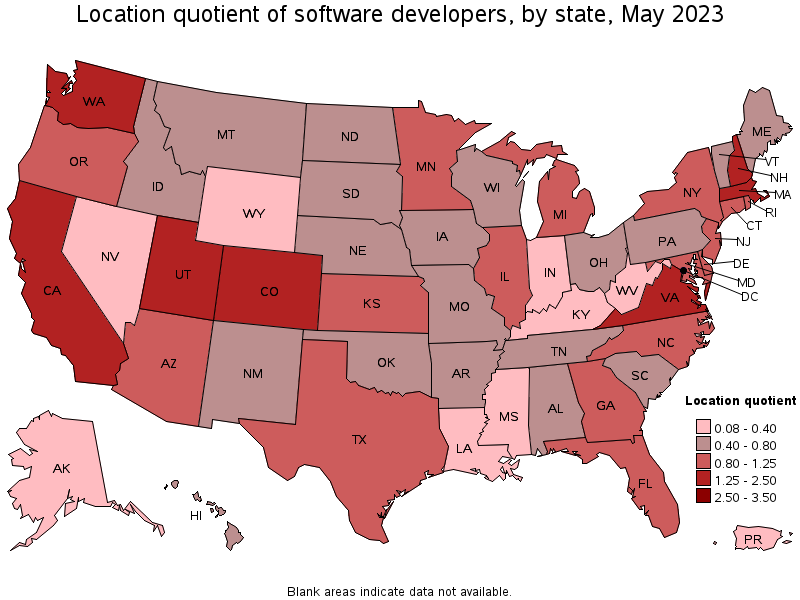
However, with a SOC code, we can discover that they have been classified into the occupational category of “software developer” (SOC code = 15-1252), showing the career progression we might expect for someone with a computer science degree.
Background
In 2025, ERDC started receiving SOC code data from the Employment Security Department (ESD). Almost a dozen states maintain sophisticated employment data on their workforce, known as enhanced wage records. Washington’s enhanced employment data contains job titles, hours worked, and pay rates. The job title data, powered by SOC codes, has been required since 2022, due to RCW 50.12.070, a Washington law requiring employers to report SOC codes when submitting quarterly unemployment insurance reports to ESD. Once ERDC received SOC codes from ESD, we then linked this new occupational data to existing education data within our P20W data system, making us one of the first U.S. states to successfully analyze connections between postsecondary programs and subsequent jobs and wages.
Occupational destinations and other future research
A collaborative study between UW and ERDC used this new data to analyze occupational destinations of students completing Washington’s postsecondary programs. This preliminary work found that in fields like nursing and construction, many graduates’ first jobs are in their respective fields.
As more research and analysis is conducted with this rich occupational data connected to ERDC’s longitudinal data system, new insights about how education prepares people for their future may emerge.
Interested in working occupational data? Learn how to request ERDC data.